

Kidney Transplant Surgery
When the kidneys lose its ability to function properly, the condition is term as end-stage renal disease (ESRD). Under such condition the patient has to undergo some form of renal replacement therapy. One such modality is called hemodialysis which is the mechanical process to clean the blood of waste products in our body. Peritoneal dialysis is the other option in which toxins are removed by passing chemical solutions through the abdomen.
However, both the options are not the permanent option to cure kidney failure. Kidney transplant provide an appropriate solution for such patient.
Some of the conditions that may cause ESRD comprise:
- High blood pressure or diabetes may cause kidney failure
- Polycystic kidney disease or other inherited disorder
- Frequent urinary infections
- Various types of Glomerulonephritis
- Lupus and other immune system disease
- Obstruction and congenital defects may also be the cause of renal failure
- Other miscellaneous causes like stone disease, nephrectomy etc
Transplant Surgery
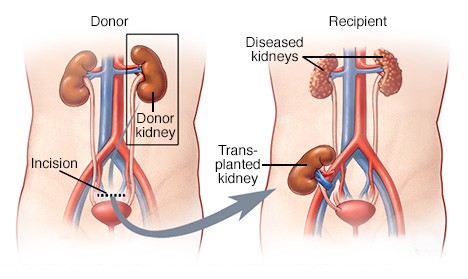
The process of kidney transplant surgery includes placing a healthy kidney into the patient. The kidney can be obtained from the living donor or deceased donor. The duration of the kidney transplant surgery may last from two to four hours. During the operation your own kidney is not removed however the donor kidney is placed in your pelvis rather than the usual kidney location in our body. The artery that carries blood to the kidney and the vein that removes blood from it are surgically connected or attached to two blood vessels in the pelvis. Subsequently, the ureter or tube that carries urine from the kidney to the bladder is transplanted with the help of an incision in the bladder.
Living donor
Any healthy person can donate kidney. In order to donate kidney the donor must possess good health. He must be duly informed about transplantation and ready to give informed consent. The donor may have chance of complication as it is with any major operation; however he enjoys the same life expectancy, general health and kidney function as any other normal person.
Cadaver donor
When the kidney is obtained from the deceased donor, it is called cadaver donor. However whether it is living donor or cadaver donor, all donors are carefully and duly screened to prevent any complication and disease transmission later on.
Our Expertise

Urological Cancers
Diagnosis and advanced treatment of prostate, bladder, kidney, and testicular cancers using surgery, targeted therapy, and multidisciplinary care outcomes overall.

Robotic Surgery
Minimally invasive robotic procedures offering precision, incisions, reduced pain, quicker recovery, and improved outcomes for complex urological conditions and surgeries.

Kidney Transplant Surgery
Comprehensive kidney transplant services including evaluation, donor matching, surgery, and lifelong care to restore function and enhance quality of life.

Female Urology
Specialized care for urinary incontinence, pelvic floor disorders, recurrent infections, and bladder issues in women with personalized treatment plans effective.

Mens Health & Infertility
Diagnosis and treatment of male infertility, erectile dysfunction, hormonal imbalances, and reproductive health issues with advanced, evidence-based therapies clinical care.

Stone Treatment
Advanced management of kidney and urinary stones using laser lithotripsy, minimally invasive techniques, and prevention strategies to reduce recurrence risk.